MROCO Furniture Leveling Feet – Clean-Lined Living Room Fix, Black Base Levelers for Scandinavian Sofas and Side Tables
MROCO Furniture Leveling Feet – Clean-Lined Living Room Fix, Black Base Levelers for Scandinavian Sofas and Side Tables
Couldn't load pickup availability
Why you'll love it
- T-nuts included in the box mean a one-trip purchase with no extra hardware run to the hardware store
- Supports over 200 lbs per foot, so it handles heavy dining tables and workbenches without bending
- Galvanized steel and PP non-slip base resist rust in humid kitchens, bathrooms, and covered patios
- Adjustable 1/3" to 3/4" range gives fine-tuning control that plastic shims and felt pads can't match
- Multiple thread sizes (1/4"-20 and 3/8"-16) and pack quantities (4, 8, 12, 24) cover nearly any American-made furniture brand
- Black base blends discreetly under most furniture so the fix is invisible to guests
Perfect for
- Stop wobbly dining tables and chairs on uneven hardwood or tile floors
- Stabilize a home office desk so monitors and laptops don't shake during work
- Replace stripped or broken original furniture feet on cabinets and stools
- Protect hardwood and laminate flooring from scratches when moving heavy furniture
- Level restaurant and café tables throughout the day to stop customer complaints about tipping drinks

-

- Established in 2014, MROCO is your trusted desktop accessories brand. Our company consists of a group of enthusiastic experts seeking to optimize your home and office with innovative and practical products, customized to your needs.
- Our team of developers, designers, and engineers will stop at nothing to design and execute the highest quality accessories that fit your lifestyle. MROCO.LLC has partnered with the top suppliers in the industry.
-


Adjustment Feet
-

Product Information
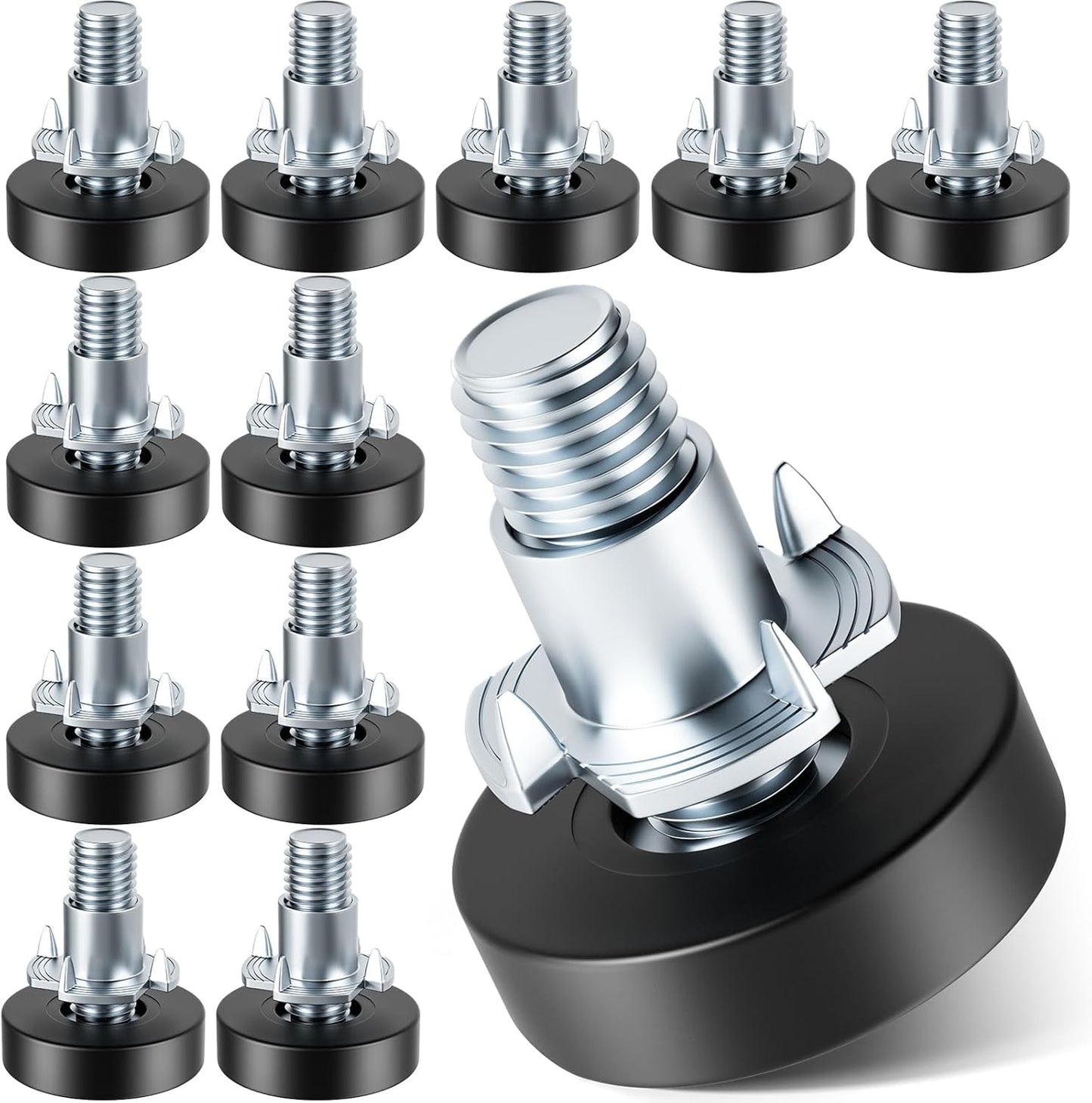
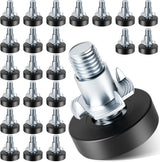
!!If you find any parts missing after receiving the goods, please email us and we will respond within 24 hours and give you a satisfactory answer. SETS & SIZES: Package contains 12 furniture leveling feet and comes with 12 T-nuts. Inch coarse thread, 1/4"-20 UNC. Product height is 1"(25mm), screw length is 0.7"(18mm), base diameter is 1"(25mm), and base thickness is 0.29"(7mm). STURDY MATERIAL: The furniture leveling feet are made of galvanized steel and black PP non-slip base, the leveling rails are strong enough and rust-proof. The height of the furniture leveler can be adjusted via threads (1/3" - 3/4") according to your needs. Can support over 200 lbs. FUNCTION: Furniture leveling feet are adjustable devices that attach to the bottom of furniture legs to provide stability on uneven surfaces. Preventing furniture from shaking also allows furniture to be moved easily, protects floors from scratches, and reduces noise when moving furniture. WIDE APPLICATION: Adjustable table legs are compatible with various flooring types—wood, laminate, hardwood, tile, and carpet. They suit a wide range of furniture pieces like tables, cabinets, chairs, desks, TV stands, shoe racks, and more. Whether indoors or outdoors, these legs offer versatile height adjustment for tables, chairs, kitchen cabinets, stools, dressing tables, patio furniture, and even restaurant setups. NOTE!! MROCO adjustable feet fit most American-made furniture feet and level with ease to update your furniture feet with ease. Please check the size before purchasing to make sure it will fit your replacement. Adjustable furniture legs are recommended for wood furniture with legs greater than 1 inch in diameter. If it is smaller than this size, there is a risk of cracking during installation.
Brand MROCO Color Black Size 1/4"-20 / 12 Pack Style Modern Product Care Instructions No Leg Style Modern Furniture Finish Alloy Steel Number of Pieces 12 Weight Limit 200 Pounds Manufacturer MROCO.LLC Product Dimensions 0.3 x 0.3 x 1 inches Item Weight 5 ounces
Frequently Asked Questions
Will the leveler itself add visual clutter under my furniture?
No. The black PP base and dark steel shaft blend into the shadow beneath almost any piece of furniture. From a normal seated or standing position, the leveler is essentially invisible, which keeps the visual focus on the furniture and the room rather than the hardware.
I prefer furniture with hidden hardware — will these look like an obvious add-on?
The T-nut installs inside the leg, and the shaft is recessed into the furniture. The only visible element is the small black base on the floor, which is designed to read as part of the furniture's footprint rather than as a separate piece of hardware.
Does the black base match the simple, neutral palette I'm going for?
Yes. Black is one of the most versatile finishes for hidden hardware, pairing cleanly with white, oak, walnut, black, and gray furniture. The matte PP base does not reflect light or call attention to itself, which suits a restrained, less-is-more aesthetic.
Will the steel shaft clash with my natural wood, no-finish look?
The visible shaft is short and shadow-darkened, so it reads as a quiet utilitarian detail rather than a contrasting industrial part. On natural oak, ash, or pine, the leveler disappears into the underside of the leg within a few feet of viewing distance.
Can I install these on a piece that I plan to photograph for a minimalist portfolio?
Yes. Interior designers, furniture makers, and home stagers routinely install these levelers before photographing pieces, because a wobble-free piece photographs better and looks more intentional. The hidden hardware supports a clean composition.
I run a Scandinavian-inspired Airbnb — will these help with guest reviews about wobbly beds?
Yes. Wobbly beds and bedside tables are a top guest complaint in vacation rentals. These levelers solve the problem in minutes and are essentially invisible, which preserves the calm, designed look your guests book the property for.
Are these a good fit for a Japandi-style dining room?
Yes. The combination of dark steel, matte black base, and hidden installation matches the Japandi preference for understated, functional hardware. Once installed, the leveler is part of the furniture's quiet support system rather than a visible accent.
I'm furnishing a small studio apartment — will the levelers take up extra space?
No. The levelers are recessed into the bottom of each leg, so they do not add to the furniture's footprint at all. In tight studio layouts, having flat, level furniture actually saves space by eliminating the gap and angled shims people use as workarounds.
Will the levelers work on my platform bed with hidden legs?
Yes, as long as the leg has enough material to accept a T-nut. Platform beds with thin metal legs may not be suitable, but most solid-wood platform frames are. Once installed, the leveler is completely hidden under the bed.
Can I use these to level a low-slung media console in my media room?
Yes. Low media consoles are especially prone to wobble because of their long span and heavy equipment load. The 200+ lb per-foot capacity easily supports a TV, audio gear, and the console itself, and the leveler stays hidden behind the console's front edge.
How do these compare to those decorative nail-on furniture glides?
Nail-on glides are designed to protect floors from scratches, not to level furniture. These threaded levelers actually fix the wobble, support over 200 lbs per foot, and can be installed without leaving nail holes in the leg. They serve a different purpose entirely.
Are these better than the plastic stick-on felt pads on my console?
Felt pads protect floors but offer zero leveling. On an uneven floor, a felt pad simply compresses on the high side while leaving the low side short, and the console still wobbles. These threaded levelers solve the wobble at its source and last far longer than adhesive felt.
Why not just put a coaster or folded paper under the short leg?
A coaster or paper is a temporary patch that slides out, compresses, and looks unfinished. A threaded leveler is mechanically fixed, holds the adjustment permanently, and stays out of sight. It is the clean, permanent version of the coaster fix.
Will the leveler itself be visible in photos of my minimalist living room?
In wide and medium shots, no. In close-up detail shots of the floor, you may see the small black base, but it reads as an intentional design detail rather than as a fix. Most interior photographers never worry about the leveler showing in a styled shot.
I'm not handy and don't want to deal with complex installation — is this too much?
No. The T-nut drops into a drilled hole, the leveler screws in by hand, and you turn the base to adjust height. There is no glue, no brackets, and no special tools beyond a drill. Most minimalist-minded buyers appreciate that the install is as clean as the result.
Will adding these levelers to my furniture look like a DIY hack to guests?
No. Once installed, the leveler is hidden under the leg, the furniture sits solid, and there is no visible modification. Guests will simply notice that the table does not wobble — which is exactly the point of a well-designed, intentional home.
How do I install the leveling feet on a piece of furniture without existing mounting holes?
Flip the furniture on its side or upside down. Mark the center of each leg about 3/4" up from the bottom face. Drill a hole sized for the T-nut (typically 5/16" for the 1/4"-20 T-nut and 7/16" for the 3/8"-16 T-nut) to the depth of the T-nut barrel. Tap the T-nut into the hole with a hammer, then screw the leveling foot in by hand. Adjust the foot height by rotating it until the furniture sits level.
How do I know which thread size — 1/4"-20 or 3/8"-16 — to order?
The thread size depends on the hole in your furniture leg. Measure the inside diameter of the existing hole or T-nut, and count the threads per inch if possible. 1/4"-20 is the most common size for residential furniture; 3/8"-16 is typically used for heavier commercial or workshop pieces. If you are drilling new holes, match the T-nut size to the leg thickness — 1/4"-20 for legs under about 2" thick, 3/8"-16 for thicker legs.
Can I adjust the height after the furniture is fully assembled and in place?
Yes. That is one of the main advantages of threaded levelers. Simply rotate the base of each foot by hand to raise or lower that corner. Most adjustments take only a few turns, and you do not need to move the furniture to make fine adjustments.
Will these fit my IKEA furniture?
Many IKEA pieces use a 5/16" or 8mm pre-drilled leg hole, which is close to but not exactly 1/4"-20. Some IKEA legs accept a 1/4"-20 T-nut with light sanding of the hole; others require a 3/8"-16 T-nut drilled to the correct size. Measure the existing hole before ordering, and choose the closest thread size.
Do these work on metal furniture legs or only wood?
T-nut installation requires a solid material that the T-nut teeth can grip, which is typically wood. For metal tube legs, you would need a threaded insert or sleeve adapter, which we do not currently include. For wood legs, hardwood, softwood, and engineered wood all work with the included T-nuts.
What exactly is in the box when I order?
Each box contains the quantity of leveling feet listed in the product title (4, 8, 12, or 24 pieces) plus a matching number of T-nuts. The T-nut thread matches the leveling foot thread. No additional hardware, tools, or adhesives are required for installation, though a drill and bit may be needed if your furniture does not have pre-drilled mounting holes.
Are the levelers safe for hardwood, laminate, tile, and carpet?
Yes. The PP non-slip base is engineered to grip all common flooring types without scratching, scuffing, or leaving residue. The polymer pad is softer than the floor surface itself, so it will not damage hardwood, engineered wood, laminate, luxury vinyl, porcelain or ceramic tile, natural stone, concrete, or low-pile carpet. For high-pile carpet, additional support under the base may be needed.
Will the threaded shaft bend or strip under heavy loads?
The galvanized steel shaft is rated for over 200 lbs of vertical load per foot, and the coarse UNC thread (1/4"-20 or 3/8"-16) resists stripping far better than fine-thread hardware. Under normal furniture loads — even a fully loaded sideboard or a heavy workbench — the shaft and threads will not bend, deform, or strip.
What is the difference between furniture levelers, furniture glides, and furniture leg caps?
Furniture levelers are threaded adjusters that raise or lower each leg independently to fix wobble. Furniture glides are flat pads (felt, plastic, or metal) attached to the bottom of a leg to protect the floor from scratches, but they offer no height adjustment. Furniture leg caps are decorative covers that slip over the leg end for appearance, also with no leveling function. Levelers are the only category that actually solves a wobble problem.