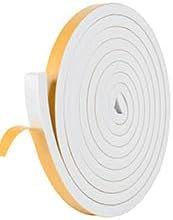
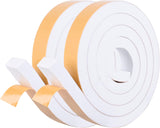
Kikerike Self Adhesive Foam Tape – Minimalist Bedroom Window Insulation That Hides in Plain Sight
Kikerike Self Adhesive Foam Tape – Minimalist Bedroom Window Insulation That Hides in Plain Sight
Couldn't load pickup availability
Why you'll love it
- Strong adhesive backing holds firm without nails or screws, making it a true no-tool DIY install
- High-density CR foam resists deformation over time, unlike cheap open-cell tapes that flatten and fail
- Customizable length and shape — cut with scissors to fit any gap exactly
- Wide temperature tolerance from -50°C to 150°C means it works in garages, cars, and exterior doors
- One roll solves many problems (sound, drafts, vibration, cushioning) instead of buying separate products
- Flame-retardant and corrosion-resistant material adds safety and longevity over rubber alternatives
Perfect for
- Sealing door and window gaps to block drafts, dust, and noise
- Weatherstripping entryways before winter or summer to lower energy bills
- Dampening vibration and rattling in car doors, trunks, and speaker cabinets
- Insulating electrical cabinets and enclosures from moisture and debris
- Cushioning drawer edges, tool grips, and sports equipment contact points
Frequently Asked Questions
Will the foam tape look bulky or ruin the clean look of my door and window frames?
The slim profile sits flush against the frame, and the neutral tone blends in with most paint and wood finishes. Once installed, it reads as a subtle seal rather than a visible strip, so it preserves a polished interior look.
Does it come in a color that matches white trim and modern interiors?
The strip is a soft neutral that pairs well with white, off-white, and light wood finishes commonly found in living rooms and bedrooms. For darker frames, it can be painted over once cured.
Can I cut it to match the exact look of my custom-sized windows?
Yes. The foam can be trimmed with standard scissors to follow any frame shape, including arched, divided-light, or oversized panels, so the finished edge looks intentional rather than improvised.
Will the adhesive leave a visible residue on my painted door when I want to redecorate?
The pressure-sensitive adhesive is designed for clean removal within a normal redecorating window. Any light residue can be wiped away with mild cleaner without damaging most painted surfaces.
Does it help my room feel cozier by stopping cold air from seeping in?
Yes. By sealing gaps around doors and windows, it keeps room temperature steady, which helps your living space feel warmer in winter and more comfortable year-round, supporting a cozier atmosphere.
Is this a good upgrade for a stylish apartment where I care about aesthetics?
For renters and owners who care about both form and function, the low-profile seal adds comfort and noise reduction without altering the look of the space, making it a renter-friendly aesthetic upgrade.
Will it yellow or discolor over time on a sunny window?
The closed-cell neoprene foam resists UV-related discoloration better than open-cell foam tapes, so it holds its appearance longer on sun-exposed window frames.
Can I use it to soften the sound of street noise in my bedroom?
Yes. Sealing the gaps around your bedroom window is one of the most effective ways to reduce outside noise, and the dense foam structure helps absorb and block sound transmission.
How does it compare to rubber weather stripping for a designer-style door?
Rubber strips often look industrial and can compress unevenly. This foam tape has a cleaner edge, a more refined profile, and a longer rebound life, which suits a finished interior better.
Does it look like an obvious DIY fix or a more permanent home improvement?
Once pressed into place along a clean frame, it looks like a deliberate, permanent seal. The key is to measure, cut, and align it carefully, and the result will read as a clean home upgrade rather than a temporary patch.
Is it safe to use on freshly painted doors without ruining the finish?
We recommend waiting at least 72 hours after painting before applying the tape so the adhesive can bond to a fully cured surface. This prevents pulling fresh paint when adjustments are made.
Will it work behind curtains and blinds where appearance is hidden?
Yes. It is a strong choice for hidden sealing applications because the dense foam still blocks drafts and sound even when it is not visible.
Does it help with the musty smell that comes from old window drafts?
By closing off gaps that let in damp outside air, the seal can help reduce the moisture and stale-air cycles that contribute to musty smells near older windows.
Can I install it in a way that complements a modern farmhouse or Scandinavian look?
The neutral tone and slim line work well with minimalist and farmhouse styles. Pair it with natural wood or matte black hardware and the strip essentially disappears into the design.
Will it make my front door look like I just renovated it?
Many buyers use it as a quick visual and functional upgrade. A sealed door that no longer rattles or leaks light reads as a more cared-for entryway, which contributes to a refreshed look.
Is the foam tape itself thick enough to be noticeable from across the room?
No. From normal viewing distance the seal is barely noticeable, especially against the frame. The improvement you notice is the comfort, not the strip itself.
How do I install the foam tape on a door or window?
Clean the surface with rubbing alcohol and let it dry completely. Measure the gap, cut the strip to length with scissors, peel off the backing, and press the foam firmly into place along the frame. Apply pressure for about 30 seconds to fully activate the adhesive.
How do I prepare the surface so the adhesive sticks properly?
Wipe the area with isopropyl alcohol to remove dust, oil, and old adhesive residue. Make sure the surface is completely dry and at least 10°C before applying. Avoid touching the adhesive side of the strip with your fingers during install.
Can the foam tape be removed without damaging the surface underneath?
Yes. Peel it back slowly at a low angle. Any light adhesive residue can be removed with a mild cleaner or adhesive remover. It is designed to come off cleanly from most painted, wood, metal, and glass surfaces.
Will it stick to painted, wood, metal, and glass surfaces?
Yes. The pressure-sensitive adhesive is engineered to bond to all of these common surfaces, including painted door frames, varnished wood window casings, anodized aluminum, and standard glass.
Does it work on uneven, warped, or curved frames?
Yes. The flexible foam compresses and conforms to irregular surfaces, which is one of its advantages over rigid seals. For very wide gaps, use a thicker profile; for narrow gaps, choose a thinner one.
What is included in the box when I order it?
Each order includes one roll of self-adhesive foam tape in the size you selected, with the protective adhesive liner on the back. You will need only scissors for installation; no other tools or accessories are required.
Is the foam tape safe for long-term indoor use?
Yes. The closed-cell neoprene foam is low-odor, does not off-gas, and is safe for continuous indoor use in bedrooms, nurseries, and home offices.
Will the foam lose its shape or stop sealing after a few months?
No. The high-density CR foam is designed to rebound after compression, so it keeps its seal far longer than cheap open-cell foam tapes that flatten and fail within weeks.
What is the difference between foam weather stripping and rubber weather stripping?
Foam weather stripping is softer, easier to install, and conforms better to irregular gaps. Rubber weather stripping is denser and longer-lasting on high-traffic surfaces, but it is harder to cut and install. Foam is generally the better choice for DIY home and auto use.