It Didn't Start with You – Inherited Family Patterns Workbook for Bath Time Reflection and Calming Nightly Routine
It Didn't Start with You – Inherited Family Patterns Workbook for Bath Time Reflection and Calming Nightly Routine
Couldn't load pickup availability
Why you'll love it
- Combines scientific research with accessible storytelling for credible yet readable insights
- Offers concrete exercises and tools rather than abstract theory
- Validates experiences of feeling trapped by family patterns with real-world examples
- Provides a hopeful, actionable framework to break cycles rather than just diagnose them
- Backed by a recognized bestseller with broad cultural impact
Perfect for
- Personal journey to understand inherited emotional patterns
- Companion reading during therapy or counseling
- Gift for someone going through a life transition or healing process
- Book club selection for meaningful group discussion
- Reference guide for identifying and ending recurring family dynamics
“This groundbreaking book offers a compelling understanding of inherited trauma and fresh, powerful tools for relieving its suffering. Mark Wolynn is a wise and trustworthy guide on the journey toward healing.” —Tara Brach, PhD, author of Radical Acceptance and True Refuge
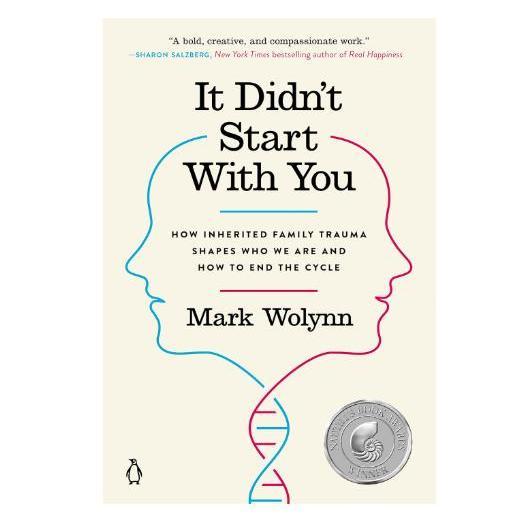
A groundbreaking approach to transforming traumatic legacies passed down in families over generations, by an acclaimed expert in the field
Depression. Anxiety. Chronic Pain. Phobias. Obsessive thoughts. The evidence is compelling: the roots of these difficulties may not reside in our immediate life experience or in chemical imbalances in our brains—but in the lives of our parents, grandparents, and even great-grandparents. The latest scientific research, now making headlines, supports what many have long intuited—that traumatic experience can be passed down through generations. It Didn’t Start with You builds on the work of leading experts in post-traumatic stress, including Mount Sinai School of Medicine neuroscientist Rachel Yehuda and psychiatrist Bessel van der Kolk, author of The Body Keeps the Score. Even if the person who suffered the original trauma has died, or the story has been forgotten or silenced, memory and feelings can live on. These emotional legacies are often hidden, encoded in everything from gene expression to everyday language, and they play a far greater role in our emotional and physical health than has ever before been understood.
As a pioneer in the field of inherited family trauma, Mark Wolynn has worked with individuals and groups on a therapeutic level for over twenty years. It Didn’t Start with You offers a pragmatic and prescriptive guide to his method, the Core Language Approach. Diagnostic self-inventories provide a way to uncover the fears and anxieties conveyed through everyday words, behaviors, and physical symptoms. Techniques for developing a genogram or extended family tree create a map of experiences going back through the generations. And visualization, active imagination, and direct dialogue create pathways to reconnection, integration, and reclaiming life and health. It Didn’t Start With You is a transformative approach to resolving longstanding difficulties that in many cases, traditional therapy, drugs, or other interventions have not had the capacity to touch.
Frequently Asked Questions
Can reading this book before bed actually help me feel calmer and more grounded?
Yes, many readers use the memoir-style chapters and journaling prompts as part of an evening wind-down routine. The reflective tone encourages slow, mindful reading rather than intense stimulation, making it well suited to a bedside ritual.
Does this book include exercises I can use as part of a self-care practice?
It does. The book weaves in practical exercises and journaling prompts throughout, designed to help you actively identify inherited patterns and work through them — turning passive reading into a personal healing practice.
Is this book appropriate for someone new to therapy or inner work?
Absolutely. The author writes in an accessible, narrative-driven style grounded in neuroscience, so you do not need a clinical background to follow along. Many readers pick it up at the very start of their healing journey.
Will this book leave me feeling hopeful rather than overwhelmed by heavy topics?
Yes, the book is structured around a forward-looking framework for ending cycles, not just diagnosing pain. Readers consistently report feeling validated and equipped with actionable next steps rather than stuck.
Can I read a few pages at a time as part of a calming ritual?
Definitely. The chapters are written in a memoir-style format that lends itself well to short, intentional reading sessions, making it easy to pair with a bath, tea, or quiet evening routine.
Is this a good companion to meditation or mindfulness practice?
Yes, many readers pair the book with meditation, breathwork, or journaling because the reflective prompts naturally extend into a longer mindfulness practice. It complements rather than competes with other wellness habits.
How is this different from a typical psychology textbook?
Unlike a clinical textbook, this book blends neuroscience research with personal storytelling, so the insights feel relatable and human rather than academic. It is designed to be absorbed during personal reading time, not studied for an exam.
Will I need to set aside long blocks of time to get value from it?
Not at all. The exercises and prompts are designed for short, focused engagements — even fifteen to twenty minutes of intentional reading can produce meaningful reflection and progress.
I'm worried this book will just confirm painful things without offering real solutions — does it actually help?
That is a common concern, and the book addresses it directly by pairing every insight about inherited patterns with a step-by-step framework and concrete tools to end the cycle. Readers describe it as hopeful and actionable rather than just diagnostic.
Is the tone gentle enough for someone who is emotionally sensitive right now?
The author writes with compassion and validates difficult experiences throughout, but the subject matter can surface heavy feelings. Many sensitive readers pace themselves and use the journal prompts as a soft landing — and some pair the book with a therapist for support.
I'm not sure I have 'trauma' — is this book still relevant to my life?
Yes. The book explores inherited emotional patterns well beyond what most people would label as trauma, including everyday anxieties, relationship dynamics, and self-doubt. If you have ever felt inexplicably shaped by your family, this book speaks to you.
How should I approach reading this book for the best results?
Read it slowly, keep a journal nearby, and pause to complete the exercises as they appear rather than rushing through. The book is designed for active engagement, so the more you reflect as you go, the more value you will get from it.
Do I need to read it in a specific order?
No, the chapters flow naturally from start to finish, but the exercises build on one another, so reading sequentially tends to produce the deepest experience. If you prefer to jump around, the framework section near the end works well as a standalone reference.
How long does it typically take to finish the book?
Most readers finish it in two to four weeks reading at a comfortable pace of a few chapters per sitting. Many people return to the exercises over a longer period, treating the book as an ongoing practice rather than a one-time read.
Does this book work alongside therapy or counseling?
Yes, it is frequently recommended by therapists and pairs well with ongoing counseling because it gives clients a shared vocabulary and structured exercises to use between sessions. It is a complement to, not a replacement for, professional support.
Is this book compatible with other self-help or psychology titles I am already reading?
It is. The book references and complements a wide range of work in attachment theory, trauma recovery, and family systems, so it layers well with titles on boundaries, inner child work, and generational healing.
What is included when I purchase the book?
You will receive the printed book containing the full narrative, research foundation, step-by-step framework, and integrated exercises and journaling prompts. No additional materials are required to get started.
Is this book appropriate for younger readers or teens?
The content is written for adult readers and deals with emotionally weighty themes including trauma, family dysfunction, and inherited psychological patterns. Parents and educators should use their own judgment based on the individual reader's maturity and emotional readiness.
What if the book brings up difficult emotions while I am reading?
That is a normal response to this material, and the author writes with compassion specifically to support readers through those moments. Pacing yourself, journaling your reactions, and pairing the book with a therapist or trusted friend are all good ways to navigate the experience safely.
How does a book on inherited trauma differ from a general memoir or self-help title?
Unlike a memoir that tells one person's story or a self-help book that offers broad life advice, this book zeroes in on a specific mechanism — how emotional patterns pass between generations — and combines the research, storytelling, and tools to address it directly.