De Cecco Acini Di Pepe No. 78 Pasta – Premium Bronze-Drawn Italian Pasta for Gourmet Cooking, 16 Oz
De Cecco Acini Di Pepe No. 78 Pasta – Premium Bronze-Drawn Italian Pasta for Gourmet Cooking, 16 Oz
Couldn't load pickup availability
Why you'll love it
- Heritage authenticity from a brand making pasta in Italy since 1886
- Bronze-drawn, slow-dried process delivers a rougher surface that holds sauce better
- Genuine 'fresh pasta' aroma, flavor, and firm al dente texture versus mass-market pasta
- Tiny Acini Di Pepe shape is fun for kids and ideal for clear broths and baby food
- Wide shape variety (Cavatappi, Orecchiette, Penne Rigate, Paccheri, Elbows, etc.) covers virtually any Italian recipe
- Multi-pack bundles (3-pack, 4-pack) provide pantry value and shape variety in one purchase
- Home-made taste and chewy-yet-tender texture
- Made with high-grade / real flour
- No GMO / has vitamins
- Holds shape without breaking up in water
- Ridges (rigate) are excellent for grabbing sauce
- Consistent quality across the product line
Perfect for
- Cooking traditional Italian soups and consommé with Acini Di Pepe or Farfalline
- Preparing baby food and toddler-friendly vegetable soups with tiny pasta shapes
- Making family pasta dinners with versatile shapes like Penne Rigate, Farfalle, or Orecchiette
- Building a premium multi-shape pasta pantry using 3-pack and 4-pack bundles
- Creating thick, creamy or velvety soups enhanced with croutons or julienned vegetables
- Baked tuna casserole with mushroom soup, tuna, vegetables, and grated cheese
- Served plain with oil, salt, black olives, or mayonnaise
- Hearty meat ragu, creamy pesto, or simple tomato sauce pairings


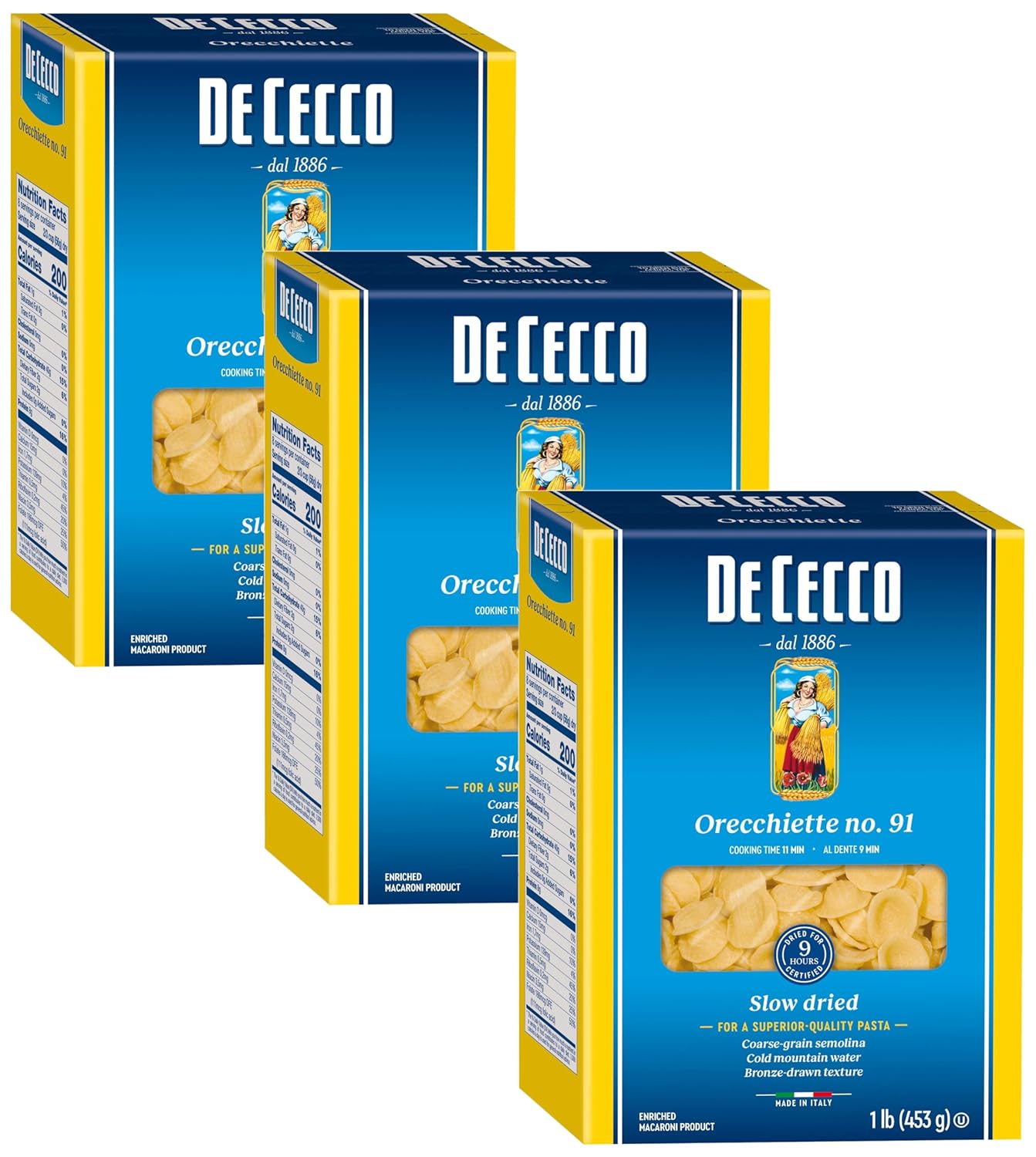
De Cecco Orecchiette No. 91 Pasta 16
Orecchiette (little ears), also known as "strascicati", are a typical pasta shape from the Apulia culinary tradition. The shape is a round disc with a slight indent in the centre. In the culinary tradition of Apulia of home-made pasta, orecchiette were made with white flour, durum wheat semolina and water. After the pasta dough had been cut into small pieces, it was "dragged" ("strascicati" in Italian) with the tip of a knife to create a sort of small shell, then pulled back with the tip of the thumb. In traditional Apulia cooking, orecchiette are cooked in boiling water with broccoli or potatoes and served with a tomato sauce and sheep's cheese, or with garlic and Oil This pasta is also known as "Recchie" and is served with vegetable ragù, or lamb and ricotta ragù.
Product Information
Authentic Italian Pasta: De Cecco Orecchiette No. 91 is a traditional Italian pasta with a small, cup-like shape. The surface allows the pasta to perfectly capture and hold thick, flavorful sauces Premium Ingredients: We use durum wheat which is a high-protein, hard variety of wheat. The result is a smooth, firm bite that holds its shape and taste, giving you a superior pasta experience The De Cecco Method: Our pasta is renowned for its slow-drying process, where the pasta is gently dried at low temperatures for longer periods. This technique preserves the pasta's flavor, texture, and nutritional quality Endless Possibilities: Pair our pasta with a hearty rag ragù, a delicious pesto, sautéed vegetables, or enjoy it with a chunky meat sauce. Our versatile pasta helps transform every lunch & dinner into an unforgettable moment Discover the Tradition: Since 1886, we've been dedicated to bringing authentic Italian flavors to tables worldwide, with passion and attention to every detail, preserving a tradition of excellence without compromise.
Product Dimensions : 2.74 x 5.22 x 6.78 inches; 1 Pounds Item model number : VSS0091 UPC : 024094070916 Manufacturer : De Cecco Pasta Units : 16.0 Ounce Best Sellers Rank: #2,280 in Grocery & Gourmet Food
Frequently Asked Questions
What makes De Cecco a premium pasta brand worth paying more for?
De Cecco has crafted pasta in Italy since 1886 using bronze dies and a slow, low-temperature drying process that protects aroma, nutrition, and creates a sauce-gripping rough surface you simply cannot find in mass-market pasta.
Does the bronze-drawing process really make a difference in the final dish?
Yes. Bronze-drawn pasta has a porous, textured surface that holds onto sauce, pesto, and broth far better than smooth, mass-produced pasta, delivering a noticeably more refined eating experience.
Is the packaging presentation suitable for a high-end pantry display?
De Cecco's classic blue packaging looks elegant on open shelving and signals authenticity, making it as fitting for a curated pantry as it is for the dinner table.
Does this pasta taste different from regular supermarket brands?
Customers consistently report a fresh-pasta aroma, richer wheat flavor, and a chewy-yet-tender al dente bite that distinguishes De Cecco from ordinary dried pasta.
Is Acini Di Pepe considered a chef-quality shape for fine dining?
Yes. Tiny Acini Di Pepe is prized in traditional Italian kitchens for elegant consommé, wedding soup, and refined pasta-in-broth presentations often featured in upscale Italian restaurants.
I'm building a luxury pasta pantry, is this a worthy addition?
Absolutely. Pairing Acini Di Pepe with shapes like Paccheri, Orecchiette, and Cavatappi gives you a versatile, restaurant-quality collection worthy of a serious home cook.
Will this pasta impress guests at an upscale dinner party?
Yes. Served in a clear broth or consommé, the tiny pasta pearls look refined, and the authentic Italian flavor and texture will be noticed by even casual guests.
Is the texture as close to fresh, handmade pasta as you can get in a dried format?
While not fresh, De Cecco's slow-drying and bronze-drawing come remarkably close, preserving the wheaty aroma and tender chew that fresh pasta is known for.
How does this compare to artisan fresh pasta from a specialty shop?
Fresh artisan pasta is wonderful but perishable; De Cecco gives you nearly the same aroma, flavor, and sauce-gripping quality in a shelf-stable format that is always ready in your pantry.
Why is Italian-imported pasta considered superior to domestic brands?
Italy's durum wheat, climate, centuries of pasta-making expertise, and strict production standards yield wheat with higher protein content, which translates to better texture and flavor in the finished dish.
Is there a noticeable difference when pairing this with high-end olive oil and finishing salts?
Yes. De Cecco's rough surface and authentic wheat flavor showcase premium ingredients beautifully, making it the ideal canvas for finishing oils, flaked salts, and aged cheeses.
Would a connoisseur of Italian cuisine consider this an authentic choice?
Yes. De Cecco is a heritage Italian brand recognized worldwide by chefs and home cooks alike as a benchmark for authentic, traditional Italian pasta.
I'm worried this is just an expensive import with no real quality difference, is it worth the premium?
The bronze die, slow drying, high-protein semolina, and 130-plus years of expertise deliver a tangible quality difference you can see in the rougher surface and taste in every bite.
Does the slow-drying process actually preserve more flavor and nutrition?
Yes. Drying at low temperatures over many hours protects the wheat's natural aroma, color, and nutrients, unlike high-heat industrial drying which can dull flavor and damage the protein structure.
Is this pasta a worthy gift for someone who already owns premium cookware?
For a serious home cook, an imported, heritage Italian pasta is one of the most appreciated gifts because the quality difference is immediately obvious the moment they taste it.
I prefer farm-to-table ingredients, does De Cecco fit that standard?
De Cecco works with high-grade durum wheat grown in Italy and an organic line is available, aligning well with farm-to-table and ingredient-conscious cooking philosophies.
How do I cook Acini Di Pepe pasta perfectly al dente?
Bring a large pot of well-salted water to a rolling boil, add the pasta, and cook for about 5 to 7 minutes, stirring occasionally. Begin tasting at 5 minutes and pull it out when it is tender but still has a slight bite in the center.
What is the best way to add Acini Di Pepe to soup without overcooking it?
Cook the soup base first, then add the dry pasta in the last 8 to 10 minutes of simmering so it absorbs flavor while staying intact. If making ahead, cook the pasta separately and add it to each bowl to prevent it from soaking up too much broth.
Can I use Acini Di Pepe in a baked casserole?
Yes. Acini Di Pepe works beautifully in baked tuna or chicken casseroles, in pasta bakes with tomato or cream sauce, and in gratins, though the small size means it cooks faster than larger pasta shapes.
Does this pasta work in a slow cooker or Instant Pot?
Yes, but add it only in the final 15 to 20 minutes of cooking in a slow cooker to avoid mushiness, and use the sauté or pressure-cook setting briefly in an Instant Pot. The small shape absorbs liquid quickly, so timing matters.
Is this pasta compatible with gluten-free diets?
No, De Cecco Acini Di Pepe is made from durum wheat semolina and contains gluten. For gluten-free needs, choose a certified gluten-free pasta made from rice, corn, or legumes.
Does this pasta pair well with oil-based and cream-based sauces?
Yes. The bronze-drawn surface grabs onto light olive oil and garlic sauces, cream sauces, pesto, and chunky vegetable sauces equally well, making it one of the most versatile shapes in the De Cecco line.
What exactly comes in the box when I order it?
Each box contains 16 oz of dry De Cecco Acini Di Pepe No. 78 pasta, ready to cook. No additional ingredients, accessories, or tools are included, and nothing extra is required to prepare it beyond water, salt, and a pot.
Is this pasta safe for people with wheat allergies?
No, this product is made from wheat and is not safe for anyone with a wheat allergy or celiac disease. Always consult your doctor for ingredient compatibility with your specific dietary needs.
How should I store an opened box of pasta?
Seal the box tightly with a clip or transfer the pasta to an airtight container, and store it in a cool, dry pantry away from moisture, heat, and direct sunlight. Properly stored, it will keep for one to two years.
What is the difference between Acini Di Pepe and orzo?
Acini Di Pepe are tiny, round, bead-like pasta, while orzo is a larger, rice-shaped pasta. Acini Di Pepe is often preferred for clear broths, baby food, and pastina dishes, while orzo works better in salads and denser soups.
What is the difference between Acini Di Pepe and pastina?
Acini Di Pepe is one specific type of pastina. Pastina is the Italian category for tiny pasta shapes used in broth and baby food, and Acini Di Pepe, with its small round beads, is the most popular variety within that category.