Brita Standard Water Filter 6-Pack – Reusable Pitcher Filters That Replace Up to 1,800 Plastic Bottles a Year
Brita Standard Water Filter 6-Pack – Reusable Pitcher Filters That Replace Up to 1,800 Plastic Bottles a Year
Couldn't load pickup availability
Why you'll love it
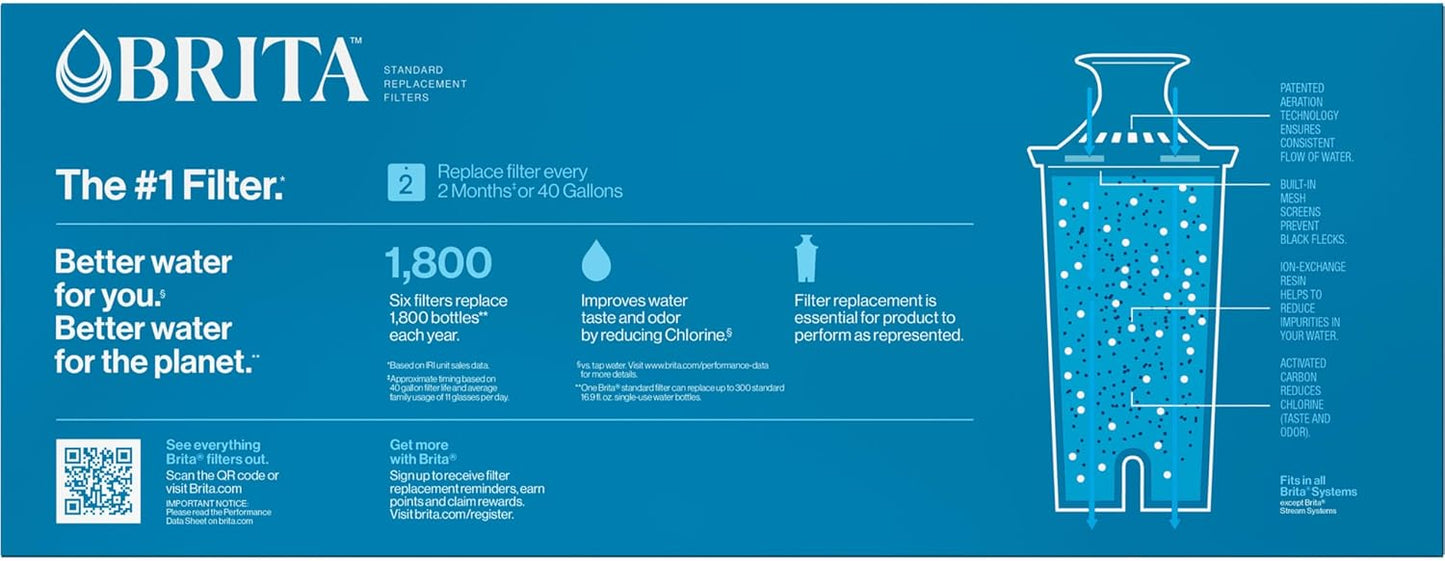
- Removes heavy metal contaminants (copper, cadmium, mercury) plus chlorine taste and odor for safer drinking water
- Replaces up to 1,800 plastic bottles per year, cutting waste and household spend
- Each filter lasts a full two months or 40 gallons, minimizing replacement frequency
- No presoak required and installs in seconds for hassle-free upkeep
- Compatible with virtually every Brita pitcher and dispenser model (except Stream) so there's no fit guesswork
- NSF external testing certification provides independent credibility on filtration claims
- No chemical or chlorine taste in filtered water
- Water flows through the filter quickly
- Water tastes clean, fresh, and crisp
- Filters don't break down or shed carbon particles during use (unlike generics)
- Glowing white filter frame is aesthetically pleasing
Perfect for
- Replacing exhausted filters in an existing Brita pitcher or dispenser
- Bulk stocking up on filters to avoid running out between replacements
- Filtering tap water for daily drinking and cooking in the kitchen
- Reducing household reliance on single-use plastic water bottles
- Routine maintenance swap every 2 months or 40 gallons
- Filtering cooking water in addition to drinking water
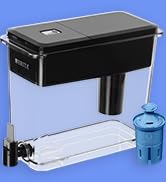
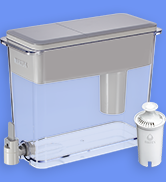
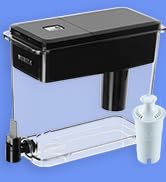
- Using with a large 27-cup refrigerator dispenser pitcher with spout
- Replacing generic/cheaper third-party filters due to quality issues




Product Information
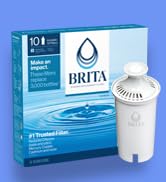
WATER FILTER: Six Brita Standard Water Filters that offer great-tasting, healthier drinking water when used in Brita systems, like a filtered water pitcher or dispenser CUTS OUT IMPURITIES: Brita replacement water filter cuts the taste and odor of chlorine and also reduces copper, cadmium and mercury impurities without leaving black flecks behind SUSTAINABLE: By switching to Brita, you can save money and replace up to 1,800 standard 16.9-oz. single-use plastic water bottles each year CONVENIENT DESIGN: Filter requires no presoak and installs quickly and easily into a Brita filter water pitcher or dispenser DURATION: One filter lasts up to two months or 40 gallons FITS BRITA SYSTEMS: This Brita water filter fits all Brita pitchers and dispensers, except Stream
Product information Material Polypropylene (PP) Product Dimensions 13.91"D x 2.31"W x 5.31"H Item Weight 400 Grams External Testing Certification NSF Product Benefits Reduces Chlorine Brand Brita Set Name Standard UPC 060258710489 Global Trade Identification Number 00060258710489, 10060258353157, 10060258355571 Unit Count 6.0 Count Compatible Water Purifier Models BRITA Amalfi Water Pitcher, BRITA Aqualux Water Pitcher, BRITA Atlantis Water Pitcher, BRITA Capri Water Pitcher, BRITA Champlain Water Pitcher, BRITA Chrome Water Filter Pitcher, BRITA Classic Water Pitcher, BRITA Color Series Water Pitcher, BRITA Deluxe Water Pitcher, BRITA Denali Water Pitcher, BRITA Everyday Water Pitcher, BRITA Grand Water Pitcher, BRITA Huron Water Pitcher, BRITA Infinity Water Pitcher, BRITA Lake Water Pitcher, BRITA Marina Water Filtration Pitcher, BRITA Metro Water Pitcher, BRITA Mini Plus Water Pitcher, BRITA Monterey Water Pitcher, BRITA Pacifica Water Pitcher, BRITA Slim Water Filter Pitcher, BRITA Soho Water Pitcher, BRITA Space Saver Water Pitcher, BRITA Stainless Steel Water Pitcher, BRITA Tahoe Water Pitcher, BRITA Ultramax Water Dispenser, BRITA Wave Water Pitcher
Frequently Asked Questions
How many plastic bottles can a 6-pack of Brita filters actually keep out of the landfill?
A single Brita Standard filter can replace up to 300 standard 16.9-ounce plastic water bottles, so a 6-pack can offset roughly 1,800 bottles per year for a typical household, cutting down significantly on single-use plastic waste.
Is filtered tap water really a more sustainable choice than bottled water?
Yes. Bottled water requires extraction, manufacturing, transportation, and disposal of plastic for every single serving, while a Brita filter uses one replaceable cartridge to treat tap water on demand. The carbon footprint of filtered tap water is a small fraction of bottled water over the same period.
Are the used Brita filters themselves recyclable?
Brita runs a recycling program through TerraCycle where you can ship back used filters at no cost so the plastic housing and carbon media are repurposed rather than landfilled. Participation details and shipping labels are available on Brita's website.
How does using Brita filters help my family cut down on plastic in the kitchen?
Instead of buying and tossing plastic water bottles every week, your family fills one Brita pitcher or dispenser from the tap. That's one reusable container doing the job of hundreds of disposable ones, which keeps plastic out of your recycling bin and your local landfill.
Is the filter housing made from recycled or eco-friendly plastic?
The Brita Standard filter housing is made of polypropylene, a durable plastic selected for long life and food safety, and the cartridge is designed to be returned through Brita's filter recycling program so the materials can be recovered and reused rather than discarded.
Is this a good choice for an eco-minded office break room?
Yes. A single Brita dispenser in a shared break room can replace cases of bottled water each month, dramatically cutting the plastic footprint of the office while giving everyone access to cleaner-tasting water on demand.
Will buying in a 6-pack reduce packaging waste compared to buying single filters?
Yes. One 6-pack uses a single outer package instead of six individual boxes, which means less cardboard, less plastic wrap, and fewer shipments over the course of the year when you stock up once for a full year of use.
Is the filter certified so I can trust the environmental and safety claims?
Yes. Brita Standard filters are NSF externally tested and certified, which independently confirms contaminant reduction and material safety, so the sustainability story isn't just marketing, it's been verified by a third party.
Does this filter help reduce microplastics in my drinking water?
Brita Standard filters are NSF-certified to reduce chlorine taste and odor and to reduce copper, cadmium, and mercury impurities. Independent testing has also shown that Brita filters reduce microplastics that can be present in tap water, supporting a lower-plastic household routine.
Why should I switch from a third-party filter if I care about sustainability?
Off-brand filters often don't last their advertised lifespan, can shed carbon particles, and may not be certified, which means you end up replacing them more often and producing more waste. Brita Standard filters reliably hit their full 40-gallon life, so you replace less and waste less.
How does Brita compare to a reverse osmosis system for environmental impact?
Reverse osmosis systems are effective but typically waste three to five gallons of water for every gallon filtered and require electricity in some setups. Brita Standard uses gravity and tap pressure, produces no wastewater, and its cartridges fit into Brita's recycling program, making it a lower-impact option for everyday drinking water.
Is Brita better than a reusable plastic water bottle for reducing waste?
Both are great tools. A reusable bottle plus a Brita filter means you can refill anywhere there's a tap, which together eliminate the need for single-use bottles entirely. The filter upgrades ordinary tap water so refilling actually feels like an upgrade rather than a compromise.
How does Brita Standard compare to generic store-brand filters for sustainability?
Generic filters often come in similar packaging but don't always deliver the full 40-gallon lifespan they claim, which means more frequent replacements and more waste. Brita Standard is NSF-certified and engineered to last the full life, so you replace less and recycle more consistently through the Brita program.
I'm worried that a 6-pack is too much and might expire before I use it all. Should I be?
Brita Standard filters have a multi-year shelf life when stored dry in their sealed packaging, so a 6-pack comfortably covers a full year for a single-pitcher household without any of the cartridges going past their prime.
Is filtered tap water really worth it if my local water is already considered good?
Even high-quality municipal water is typically treated with chlorine and travels through aging pipes, which is why many eco-conscious buyers still filter at the tap. Brita Standard polishes out chlorine taste and odor and reduces heavy metals, so you get consistently great-tasting water with a fraction of the footprint of bottled alternatives.
Can I use this filter with my large 27-cup dispenser to keep our events more sustainable?
Yes. Brita Standard fits the 27-cup dispenser pitcher with spout, so you can serve pitchers of filtered water at family dinners and parties instead of stocking single-use bottles, which is a simple way to make gatherings noticeably more sustainable.
How do I install a Brita Standard filter for the first time?
Remove the filter from its wrapper, drop it into the reservoir of your Brita pitcher or dispenser, and fill the top with cold tap water. Let the filter soak for about 15 minutes, then run two or three full pitchers of water through it and discard. After that, your pitcher is ready for everyday use.
How often should I replace my Brita Standard filter?
Replace your Brita Standard filter every 40 gallons or every two months, whichever comes first. Most Brita pitchers and dispensers have a built-in indicator that reminds you when it's time for a fresh filter, so you can swap on schedule without counting gallons manually.
Can I leave water sitting in the pitcher between refills?
Yes, but for the freshest taste it's best to use or refill the pitcher within a day or two. If you're going to be away, you can empty the pitcher and store the filter in the refrigerator in a sealed bag to keep it moist, then reinstall when you're back.
Does this filter fit my Brita pitcher or dispenser?
Brita Standard filters fit virtually all Brita pitchers and dispensers, including the 6-cup, 10-cup, and large 27-cup refrigerator dispenser pitcher with spout. The one exception is the Brita Stream line, which uses a different filter design.
Will this filter work with non-Brita pitchers?
Brita Standard filters are designed and tested for genuine Brita pitchers and dispensers. They are not guaranteed to fit or seal properly in third-party pitchers, and using them in an untested reservoir can lead to leaks or bypass, which would compromise filtration.
What comes in the box when I buy a 6-pack of Brita Standard filters?
Each box contains six individually sealed Brita Standard replacement filters along with a quick-start guide covering the initial 15-minute soak and first-use steps. No pitcher is included, so you'll want to use these with a Brita pitcher or dispenser you already own or buy separately.
Is filtered water from a Brita filter safe for kids and pets?
Yes. Brita Standard filters are NSF-certified for contaminant reduction and use a polypropylene housing that is food-contact safe. The filtered water is suitable for drinking, cooking, and filling pet bowls as part of normal household use.
How should I store unopened Brita Standard filters?
Keep unopened filters in their original sealed packaging in a cool, dry place away from direct sunlight and chemicals. Stored this way, the filters stay fresh and ready to use for several years, which is why a 6-pack is a smart way to stock up.
What's the difference between Brita Standard and Brita Longlast filters?
Brita Standard filters are designed to last 40 gallons or about two months and reduce chlorine taste and odor plus copper, cadmium, and mercury. Brita Longlast filters last longer (about 120 gallons or six months) and target a broader list of contaminants. Standard is the value workhorse for everyday use, while Longlast is the upgrade for households that want longer life and extra contaminant reduction.